Mobile lots are traded on grade definitions, and grade definitions are only useful when both sides mean the same thing by them. One buyer's A grade is another buyer's B grade, which is why so much bulk handset stock is re-graded on arrival and repriced. The checklist below is the one our trading desk works through before quoting a mobile lot.
The count is the least useful number
Ten thousand units described as mixed smartphones is not a specification. The value sits in the model list, the capacity split, the network variants and the condition profile. Two lots of the same size can differ by several times over on those four factors alone.
Start with a model-level breakdown: family, generation, storage capacity and colour where it affects demand. Group anything you cannot identify into an unknown category rather than spreading it across the good grades.
Account locks and activation status
This is the single most common reason a mobile lot is repriced downwards. A handset that cannot be activated is a parts device, however good the screen looks.
- Activation lock removed - the device reaches the home screen and can be set up
- Signed out, ready to activate - factory reset and accounts removed
- Locked - account, carrier or enterprise lock still present
- Unknown - not checked
State which of these applies, and how many units fall into each group. A buyer can work with locked units as long as the quantity is declared.
Battery health decides resale or refurbishment
Battery health separates stock that can be resold as it stands from stock that needs a battery before it can move. Where health can be read, report it in bands rather than exact percentages: above 90 percent, 80 to 90, below 80, and not readable. Devices below 80 percent are still tradable, but they are priced as refurbishment candidates.
Screen and body condition
Grade on the display first, because that is the most expensive part to replace.
- Screen intact, no visible marks - resale grade
- Light surface scratches - resale grade with cosmetic deduction
- Deep scratches or shadowing - refurbishment grade
- Cracks, dead areas or lines - repair or parts grade
Then note the body: dents, cracked backs, missing screws, camera glass damage and port damage. Be consistent across the lot, because inconsistent grading is what causes disputes later.
Network variant and capacity
A dual-SIM model, an eSIM-only model and a carrier-locked model are not interchangeable, and the storage capacity affects both demand and price. Capacity splits are worth listing explicitly: a lot weighted towards the smallest capacity is worth less than the same model count weighted towards the largest.
Tablets need a separate line
Tablets are graded on the same principles, with two additions: whether the unit is cellular or Wi-Fi only, and whether it is still supported by the current operating system. A tablet that cannot receive current updates has a narrower buyer base, and that is worth stating up front rather than letting a buyer find it.
Wearables and audio devices
Smart watches depend on pairing status, battery health and whether the strap and charger are included. Wireless earbuds depend on whether each bud and the case are present, and whether they pair and hold a charge. Loose buds without cases, or cases without buds, belong in a parts line rather than in a working lot.
Display assemblies and component lines
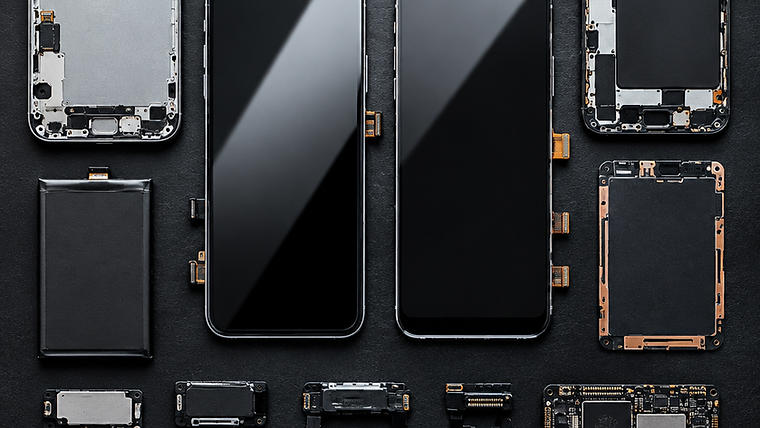
Used LCD and OLED assemblies trade as their own category, priced on model, condition and whether the frame and flex are complete. Keep them separate from complete devices: mixing assemblies into a handset count hides value on both sides.
What a clean lot description contains
Model list with quantities, capacity split, network variant mix, grade definitions you actually applied, battery health bands, account lock status and accessory inclusion. That file is the difference between an offer based on evidence and an offer based on caution.
Submit a mobile stock list
If you have smartphones, tablets, wearables, audio devices or display assemblies available, send us the model list with quantities and condition. Our trading desk reviews every submission and comes back with questions or an offer against what can be placed.
Topics covered
- used smartphones bulk
- tablet lot grading
- battery health
- account lock removal
- used smart watches
- AirPods bulk
- mobile device grading